Janaki Mandir & Beyond: A Complete Guide to Janakpur's Cultural Heritage
Most people arrive in Janakpur with one building in mind. They photograph Janaki Mandir, walk once around the courtyard, and leave the next morning thinking they have seen the city.
They have seen roughly a tenth of it.
Janakpur is the old capital of Mithila — a kingdom, a language, an art tradition and a distinct cultural world that spans the Nepal–India border and predates both countries by a very long way. The temple is the entrance to that, not the whole of it. Behind the white marble there is a city of sacred ponds, a living painting tradition practised mostly by women in village courtyards, a week-long wedding festival that draws crowds from two nations, and a food culture that has nothing to do with the hills.
This guide covers the temple properly, and then everything beyond it.
Janakpur in brief
Official name | Janakpurdham, Dhanusha District |
Status | Provincial capital of Madhesh Province |
Historic identity | Capital of the ancient Mithila kingdom, ruled by King Janak |
Elevation | About 78 m — flat Terai |
Languages | Maithili, Nepali, Bajjika |
Known as | The city of ponds |
Best months | October to March |
Biggest festival | Vivah Panchami, November or December |
Janaki Mandir: what you are actually looking at
The temple is younger than most visitors assume, and that is part of what makes it interesting.
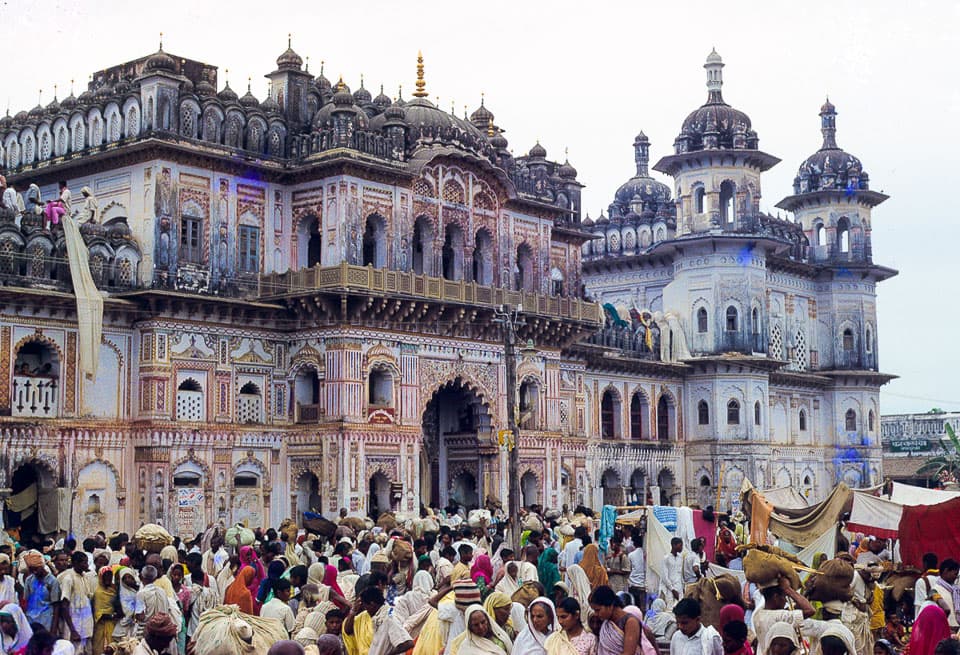
Janaki Mandir was commissioned by Queen Vrisha Bhanu Kunwari of Tikamgarh, a princely state in what is now Madhya Pradesh, and completed in 1910 AD (1967 BS). It is popularly called Naulakha Mandir — the nine-lakh temple — after its reported construction cost.
It is built entirely of white marble and stone, stands three storeys high, and contains around sixty rooms decorated with engravings, coloured glass, lattice windows and Mithila paintings.
Architecturally it is a genuine hybrid. You will see it described as Mughal, as Rajput, and as Koiri Hindu, and all three descriptions are partly right — the domes and arches, the turrets and lattice work, and the temple form underneath are drawn from different traditions and combined into something that does not look quite like anything else in Nepal. It is formally protected as an Ancient Monument under Nepali heritage law.
At the centre is the sanctum housing the golden idol of Sita, which tradition holds was discovered at the site centuries before the present temple was built. Smaller shrines around the complex hold idols of King Janak, Queen Sunaina, Rama, Lakshmana and Urmila — worth noticing, because the presence of Sita's parents and sister is a reminder that this is her home ground, not a temple where she is a visiting consort.
How to visit it well
Go at dawn. The temple opens early, the light on white marble at sunrise is extraordinary, and the crowds have not arrived. The difference between 6 AM and 11 AM here is enormous.
Then go back after dark. The complex is lit at night and it is a completely different building — softer, quieter, and full of local families rather than visitors.
Walk the upper floors and the courtyard, not just the sanctum. The lattice work and the painted rooms are the part most people skip.
Dress modestly and expect to remove your shoes. Photography rules vary by area within the complex — ask rather than assume, particularly near the sanctum.
Vivah Mandap: the wedding pavilion
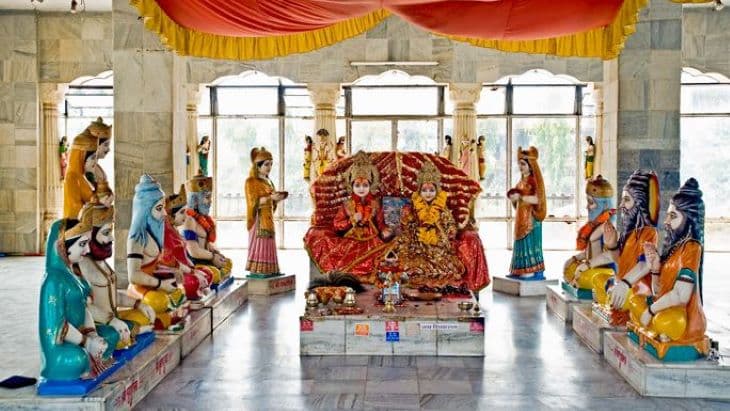
A short walk from the main temple stands the Vivah Mandap, marking the spot where, in the Ramayana, Rama and Sita were married after Rama lifted and broke Shiva's bow at the swayamvar.
Inside, seated figures depict the wedding itself, with demigods carved on the pillars as witnesses. Newly married couples come here specifically to seek blessings for their own marriages, which gives the place an atmosphere quite unlike the main temple — less grand, more personal.
If you visit only one thing besides Janaki Mandir, make it this.
Ram Mandir and the older layer
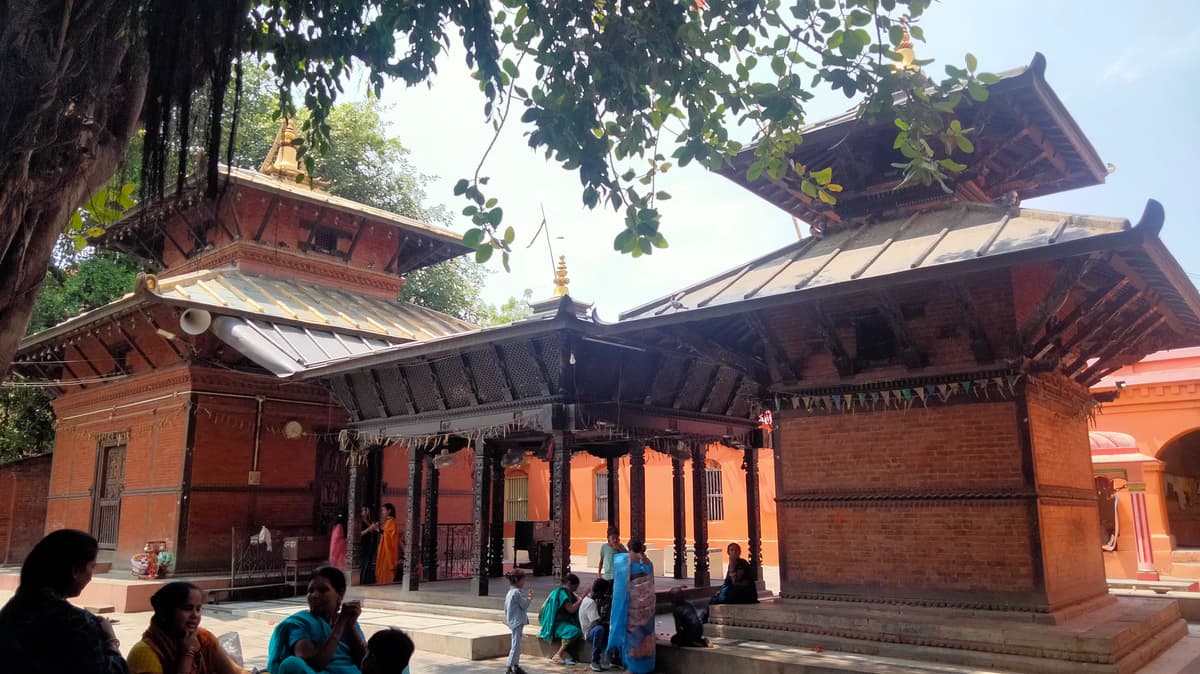
Ram Mandir, roughly ten minutes' walk from Janaki Mandir and facing Dhanush Sagar, is older than the marble temple and built in a plainer, more recognisably Nepali pagoda idiom. It is attributed to Amar Singh Thapa, and to the right of the temple stands a collection of Shiva lingams and stone idols.
It is quieter than Janaki Mandir and, for some visitors, more affecting for exactly that reason. On Ram Navami it becomes the centre of the city's celebrations.
During Vivah Panchami, Ram Mandir and Janaki Mandir are linked by ritual — the wedding procession moves between them, which makes the geography of the two temples part of the ceremony rather than incidental to it.
The city of ponds
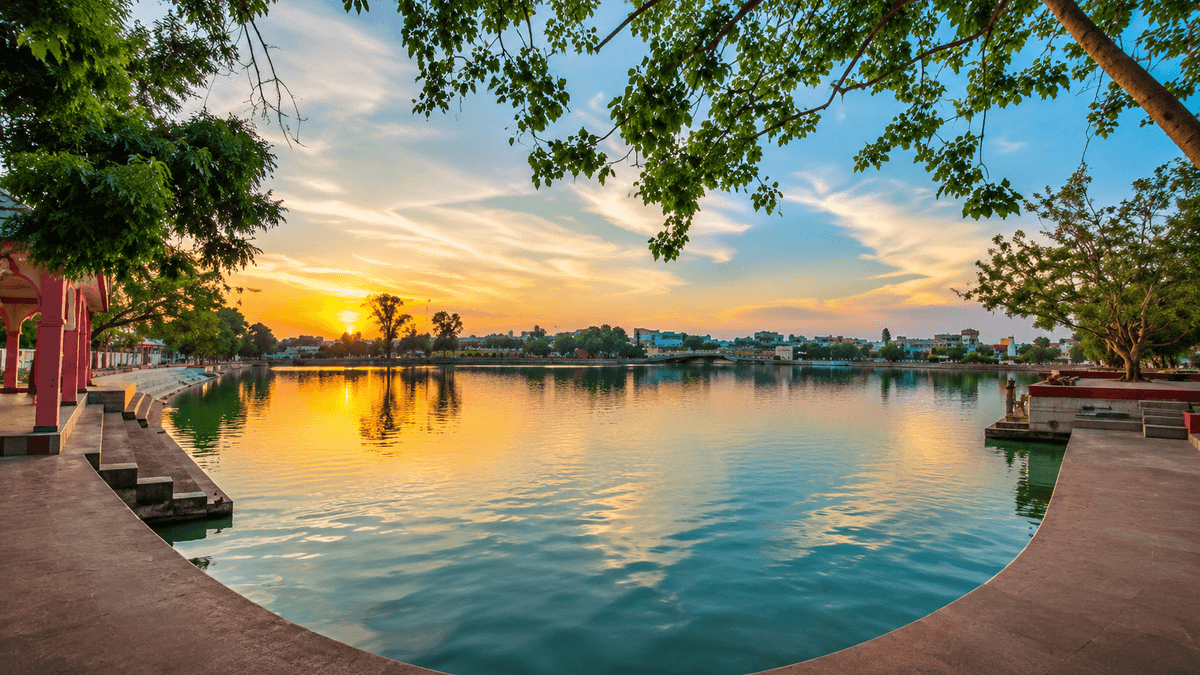
Janakpur's nickname is not decorative. The city is built around dozens of sacred water tanks, and they are central to how it functions religiously and socially.
Dhanush Sagar and Ganga Sagar, the two best known, sit close to the temple district. They are ringed by steps and shrines, and they are where the city gathers — for ritual bathing, for Chhath, and simply for the evening.
During Chhath, these ponds are the whole point. The festival, in which devotees stand in water to offer prayers to the setting and rising sun, is arguably the most visually striking religious event in the Terai. Janakpur's ponds fill with thousands of people, the banks are lined with offerings and lamps, and the city does not sleep.
If you can time a visit to Janakpur for Chhath rather than for Vivah Panchami, you will see something fewer outside visitors have witnessed.
Mithila art: the real reason to stay a second day
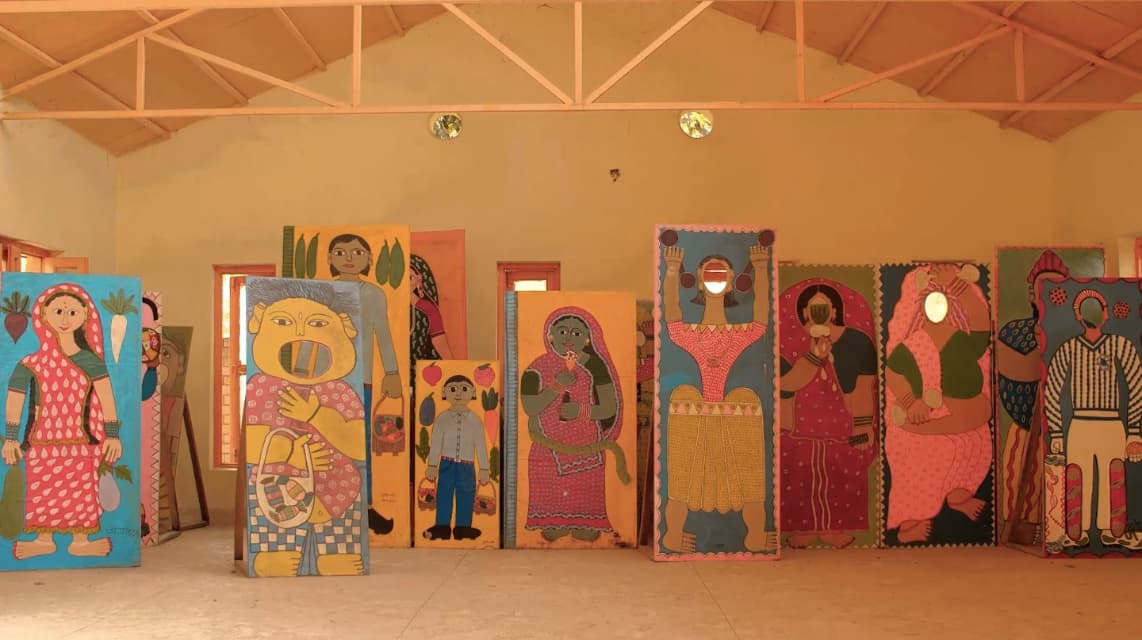
Mithila painting — also called Madhubani after the district across the border — is one of South Asia's great folk art traditions, and Janakpur is one of its two centres.
It is worth understanding what you are looking at. Traditionally, this was wall and floor painting done by women in their own homes, applied to mud walls for weddings, festivals and rituals, using natural pigments and often fingers, twigs and matchsticks rather than brushes. The imagery is dense and symbolic — fish, peacocks, lotuses, the sun and moon, and scenes from the Ramayana, filled in with pattern so that no space is left empty.
It moved onto paper and cloth relatively recently, largely as a response to drought and economic hardship, which turned a ritual practice into a livelihood. That transition is why you can buy it at all.
Buy it in Janakpur. Pieces sold in the city are cheaper, more varied and far more likely to be genuinely local than what you will find in tourist shops in Kathmandu. Look for the women's art collectives and workshops around the city — several operate as cooperatives, and buying directly puts the money where it should go.
Look at the walls, too. In villages around Janakpur, the tradition is still practised as it was — on houses, for occasions, not for sale. That is the version worth going to see.
Dhanusha Dham
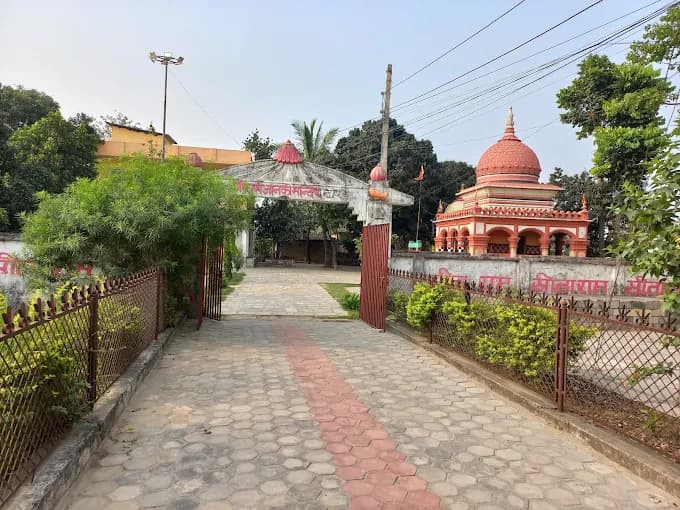
About fifteen to twenty kilometres from the city lies Dhanusha Dham, where a fragment of Shiva's broken bow is said to have fallen — the same bow whose breaking won Rama his marriage.
It is a quieter, more rural pilgrimage site than anything in the city, and it draws large crowds at Makar Sankranti. For anyone interested in the full geography of the Ramayana in Mithila rather than just its headline monument, it completes the story.
When to go
October to March is the comfortable window. Clear skies, mild days, and cool enough for walking the city.
Vivah Panchami — the fifth day of the waxing moon in the month of Margashirsha, generally falling in November or December — is the city's defining festival. The marriage of Rama and Sita is re-enacted, a wedding procession moves through the streets, and pilgrims arrive in enormous numbers from both Nepal and India. It is spectacular. It is also completely packed, accommodation is scarce and expensive, and travel in and out is difficult. Plan months ahead or accept the consequences.
Chhath, in late autumn, is the ponds at their most extraordinary.
Ram Navami, in spring, centres on Ram Mandir.
April to June is very hot. July to September is monsoon.
Eating in Janakpur
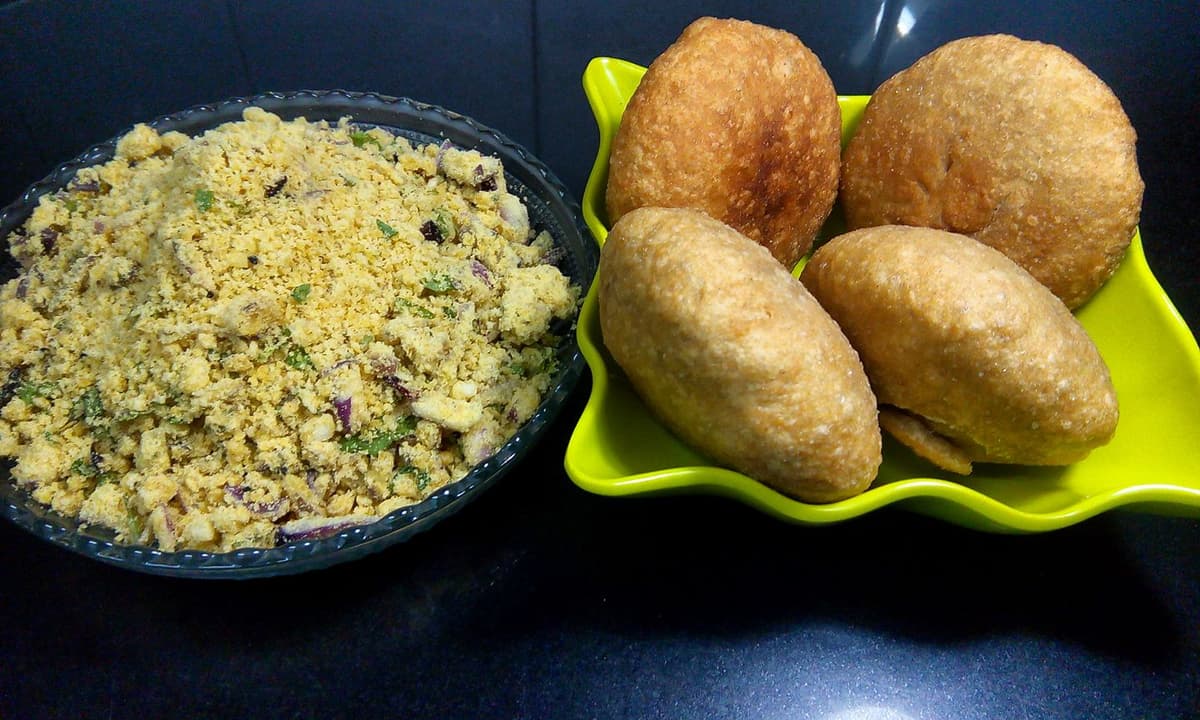
Janakpur's food is Maithili, which means it belongs to the same culinary world as Bihar rather than to hill Nepal. Expect litti, sattu, freshwater fish, mustard oil, and sweets that lean toward the Indian end of the spectrum.
This is genuinely one of the more distinctive food cultures in Nepal and one of the least written about. Eat locally rather than at your hotel.
Getting to Janakpur
By bus from Kathmandu — around 225 km, with day Hiace services taking seven to eight hours via the BP Highway and Sindhuli, and night sofa coaches taking ten to twelve hours via the longer Mugling route. Our Janakpur to Kathmandu route guide covers the return leg, including the arrival points in Kathmandu that catch people out.
By air — Janakpur has a domestic airport with connections to Kathmandu, roughly a 25-minute flight.
By rail from India — Janakpur sits on the Jaynagar line, which links it to Bihar. This is a genuinely unusual way to arrive in Nepal and, for travellers coming up from Sitamarhi or Darbhanga, often the easiest.
Foreign nationals should note that entry requirements at land and rail crossings differ from those at airports. Our Nepal visa on arrival guide covers which entry points issue visas and what documents you need.
Explore Nepal with GoMyGo
Janakpur rewards more time than most people give it, and the practical obstacle is usually the journey rather than the city. It is a long overnight coach or a winding day run, and getting the timing wrong at either end can eat into a short trip badly.
Booking ahead makes that easier to control. GoMyGo shows live inventory for the Kathmandu–Janakpur corridor in both directions across the app, on Android and iOS, and the website — day Hiace services and night VIP sofa coaches side by side, with real boarding and dropping points and a live seat map.
Payment works through eSewa, Khalti, IME Pay, fone Pay, ConnectIPS and major cards, with Indian UPI and PayPal available for travellers booking from India, which matters on this route more than almost any other in Nepal.
Confirmation lands by email and SMS immediately, and support is available around the clock on WhatsApp at +977-9704666777.
Final Words
Janaki Mandir deserves its reputation. It is a strange, beautiful, genuinely singular building, and the dawn light on it is worth the journey by itself.
But the temple is a doorway. The ponds, the wedding pavilion, the painted village walls, the food, the language you will hear on the street that is not Nepali — that is Mithila, and Janakpur is one of the last places where you can still walk into the middle of it.
Give it two days rather than one. Go to Ram Mandir in the quiet of the afternoon. Buy a painting from the woman who made it. And if you can possibly arrange it, be standing at the edge of Ganga Sagar at sunset during Chhath.
Frequently Asked Questions
Written by
GoMyGo Team
The GoMyGo team covers Nepal travel, bus routes, booking tips, and everything you need for a smoother journey.